.jpg?width=880&length=880&name=Multiple%20sport%20equipmentjpeg%20(1).jpg)
Single-Sport or Multi-Sport? The Specialization Timeline
Picture this: You’re standing on the sidelines, chatting with another parent while your child warms up. They casually mention their 10-year-old just joined a year-round travel team, and the coach “really wants everyone committed to just this sport.” A week later, your child says their friends are dropping everything but soccer. Then the email from the coach arrives: off-season workouts, optional-but-not-really tournaments, extra clinics “to stay competitive.”
You want your child to have every opportunity. You don’t want them left behind. But you also worry: Is it really healthy to pick one sport so early? What about burnout? Injuries? Fun?
If you’ve felt that tension of pride, excitement, pressure, and uncertainty all at once, you’re far from alone. Parents across the country are wrestling with the sports-specialization age question: When should kids pick one sport, and should they even specialize at all?
When we zoom out from the pressure and look at long-term athlete development, the story becomes clear: Kids don’t fall behind by playing multiple sports.
In many cases, they become stronger, healthier, and more well-rounded. And yes—they can still compete, dream, and build highlight-worthy seasons along the way.
The Pressure to Choose: Why Parents Feel Forced into Early Sports Specialization
The “Fear of Falling Behind” Culture
Youth sports today look very different than they did even a decade ago. Travel teams now start in elementary school. Club programs expect offseason commitments. Social media makes comparison unavoidable, and, somewhere along the way, a powerful myth took root: “If your child doesn’t specialize early, they won’t make the team later.”
Coaches sometimes reinforce it, intentionally or not, especially when competitive programs depend on results. Other parents do it too, often from a place of both love and worry, saying things like:
- “Everyone on the elite team trains year-round.”
- “College coaches want commitment.”
- “Specializing shows seriousness.”
It’s easy to start questioning yourself. But here’s the truth: Most of this pressure comes from adult expectations, not from what kids actually need to grow.
Dreams vs. Reality
Many parents quietly carry a hope: Maybe my child does have something special, and this will lead to a scholarship.
Having that dream isn’t wrong. It’s wonderful to support big goals. But reality matters, too:
- Only a small percentage of high school athletes compete in college.
- Even fewer receive significant scholarship money.
- Most college coaches, across multiple sports, actually prefer multi-sport athletes because they’re often more adaptable, less injured, and mentally fresher.
This doesn’t mean specialization is automatically bad. It means timing and motivation matter far more than pressure. Our role as parents isn’t to accelerate the path; it’s to protect the journey.
What Research Says: The Medical Case Against Early Specialization
Alarming Sports Specialization Statistics
Organizations like the American Academy of Pediatrics (AAP) and the American Orthopaedic Society for Sports Medicine (AOSSM) have been sounding the same alarm for years: Specializing before adolescence increases the risk of injuries and long-term health consequences
Growing bodies simply aren’t built to repeat the same movement patterns, month after month, year after year, without variation or rest. And injuries aren’t the only concern.
The Top Risks of Early Specialization in Sports
Here’s what doctors and sports scientists worry about most:
- Overuse Injuries in Youth Athletes: Repetitive motions like pitching, jumping, sprinting, and swinging stress the same joints and tendons. Without cross-training, the body doesn’t develop evenly, and injuries such as stress fractures, tendonitis, and growth plate damage become far more likely.
- Burnout in Youth Sports: Kids whose lives revolve around one sport year-round often lose their joy. The pressure builds. Mistakes feel heavier. Instead of playing because they love it, they start playing because they feel obligated.
- Limited Social and Emotional Development: When a child interacts with only one team, one coach, and one environment, they miss out on broader friendships, different leadership styles, and varied challenges.
In short, specializing too early can cost kids their health, their passion, and their long-term potential.
The Optimal Specialization Timeline (According to Experts)
Enter the Long-Term Athlete Development Model (LTAD)—a framework used worldwide to build stronger athletes over time. Here’s a simplified version:
- Ages 6–12, The “Sampling” Years: These are the try-everything years. Kids should run, climb, throw, catch, jump, swim, play tag—and yes, try multiple sports. The goal? Fun, fundamentals, and variety.
- Ages 13–15, The “Exploring” Years: Now, kids start noticing preferences. Maybe they lean toward two or three sports. They can train more intentionally, but variety is still valuable.
- Ages 16+, The “Strategic Focus” Years: If an athlete truly loves one sport and wants to pursue it competitively, this is when specialization makes sense. By now, they have balance, body awareness, and a strong athletic foundation.
The key takeaway: Early exposure. Gradual focus. Specialize when the body and the motivation are ready.
The Multi-Sport Advantage: Building Better, More Resilient Athletes
Single Sport vs. Multi-Sport: The Athletic Difference
When kids play different sports, they train different muscles, movement patterns, and mental skills. The result is:
- Fewer injuries
- Better coordination
- More creativity
- Stronger confidence
- Wider social circles
Put simply, multi-sport athletes often become better overall athletes.
The Power of Transferable Skills
Real examples make it clear:
- Basketball improves footwork, decision-making, and spatial awareness, which is great for soccer or lacrosse.
- Baseball/softball builds rotational power, timing, and hand-eye coordination, which is perfect for tennis or golf.
- Swimming strengthens core stability and cardiovascular endurance, helping in every sport.
Athletes don’t lose progress when they diversify; they build a toolbox.
Lessons from the Pros
Many elite athletes didn’t specialize early:
- Patrick Mahomes: Football and baseball
- Michael Jordan: Basketball and baseball
- Mia Hamm: Soccer, basketball, and football
College recruiters regularly praise multi-sport athletes because they:
- Adapt faster
- Compete confidently
- Stay healthier
The idea that only single-sport kids succeed? It simply doesn’t line up with reality.
Reading Your Athlete: When Specialization Might Make Sense
This isn’t about demonizing specialization. It can absolutely be the right path when it’s thoughtful and athlete-led.
Here’s a simple parent checklist:
- Is the decision child-led? Do they genuinely love this sport, or are they afraid of disappointing someone?
- What does the sport demand? Some sports (e.g., gymnastics, figure skating, diving) naturally specialize earlier.
- Is my child physically and emotionally mature enough? Are they handling pressure well? Sleeping enough? Staying injury-free?
- Is this passion or disguised burnout? Sometimes “I only want this sport” really means “I’m too exhausted to imagine anything else.”
Trust your instincts. You know your child better than any coach or program.
Documenting the Multi-Sport Journey: Why Every Season Matters
This is where the conversation connects beautifully with how we capture memories.
More Than a Highlight Reel
A child who plays multiple sports collects more than medals:
- A tough season that built resilience
- A new coach who believed in them
- Friendships formed across teams
- Moments of joy that had nothing to do with winning
Each sport adds a chapter. And later, when they look back, those seasons tell a much richer story than any trophy.
Capture the Complete Narrative with Rematch
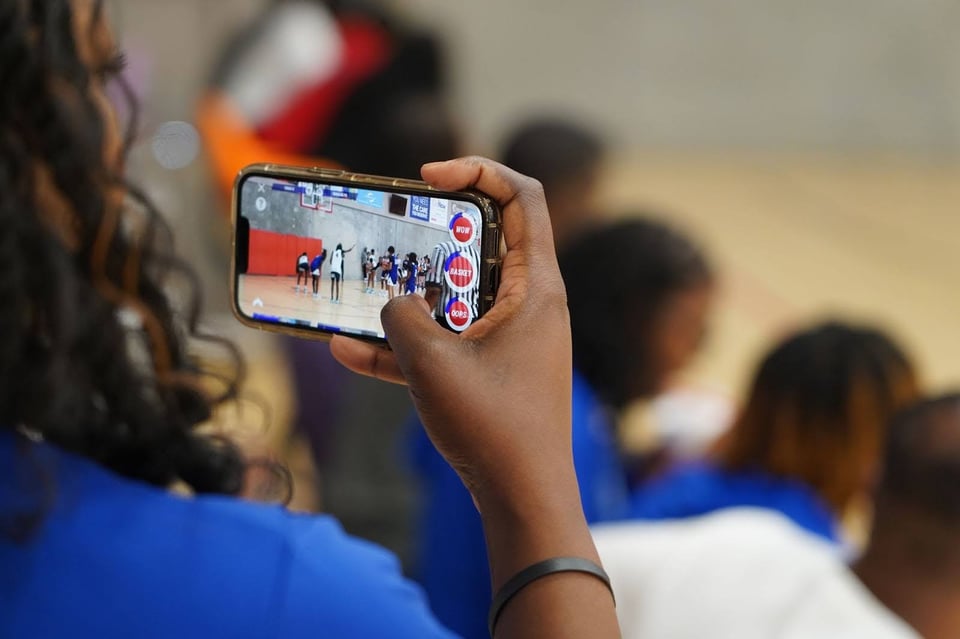
At Rematch, our mission isn’t just to record the big plays. It’s to help families preserve the whole journey.
Whether your child is juggling soccer and basketball, trying tennis for the first time, or eventually choosing to specialize, Rematch lets parents:
- Capture key moments across every season
- Share memories with family and teammates
- Watch growth unfold from early sampling to a confident young athlete
Youth sports aren’t defined by one decision or path. They’re shaped by experiences, lessons, and relationships that build character on and off the field. Documenting that journey matters.
If you’re worrying about when or whether your child should specialize, take a breath. You don’t have to race the timeline. You don’t have to follow what everyone else is doing. Focus on:
- Joy
- Health
- Long-term development
The rest tends to fall into place. And along the way, if you want a way to capture every chapter, from the first rec league goal to the high-school breakthrough, Rematch is here to help you tell that story.
Your child’s path is unique. Let’s celebrate it, protect it, and remember it one season at a time.